Do you ever feel so stressed that your chest feels tight? Your breath becomes shallow. Your mind races. You want to relax, but nothing works. The good news: you already have a powerful relaxation tool inside you – your breath. In this guide, you’ll learn breathing techniques for deep relaxation that are simple, beginner‑friendly, and work in minutes. No equipment. No experience needed. Just your breath.
Breathing Techniques for Deep Relaxation (Step‑by‑Step Guide for Beginners 2026)
Do you ever feel so stressed that your chest feels tight? Your breath becomes shallow. Your mind races. You want to relax, but nothing works.
The good news: you already have a powerful relaxation tool inside you – your breath.
In this guide, you’ll learn
breathing techniques for deep relaxation that are simple, beginner‑friendly, and work in minutes. No equipment. No experience needed. Just your breath.
By the end, you’ll know exactly how to use
deep breathing techniques to calm your mind, reduce stress, and even sleep better. Let’s begin.
What is Deep Breathing for Relaxation?
Deep breathing for relaxation means intentionally slowing down your breath and breathing deeply into your belly – not just your chest. When you breathe shallowly (common during stress), you activate your “fight or flight” response. Deep breathing does the opposite. It signals your brain that you’re safe.
Think of it as an internal volume knob. Shallow, fast breathing turns up stress. Slow, deep
breathing techniques for relaxation turn it down.
And the best part? You can learn these
breathing exercises for beginners in minutes and practice them anywhere – at home, office, or even in traffic.
Benefits of Breathing Techniques for Deep Relaxation
Why bother learning
breathing techniques for deep relaxation? Here’s what consistent practice can do for you:
Stress Relief
Deep breathing lowers cortisol (the stress hormone). A few minutes of
breathing techniques for stress can reduce feelings of overwhelm.
Anxiety Reduction
Breathing techniques for anxiety work by calming the amygdala – your brain’s fear centre. Many people feel noticeable relief after just one session.
Better Sleep
Breathing exercises for sleep help you fall asleep faster and wake up less during the night. The 4‑7‑8 technique is especially effective.
Calm Mind & Mental Clarity
When your breath is steady, your thoughts follow. You’ll experience less mental chatter and more focus.
Lung Health & Oxygen Flow
Breathing exercises to help lungs improve lung capacity and oxygen exchange. This is beneficial for overall energy and vitality.
How Deep Breathing Works (Simple Science)
You don’t need a biology degree. Here’s the easy version:
Your body has two main nervous system states:
- Sympathetic (fight or flight): Fast breathing, racing heart, tense muscles. This is stress mode.
- Parasympathetic (rest and digest): Slow breathing, calm heart, relaxed muscles. This is relaxation mode.
Deep breathing techniques act like a switch. When you exhale slowly and deeply, you activate the parasympathetic nervous system. Your heart rate slows. Blood pressure drops. Muscles soften.
That’s why
how to do deep breathing for relaxation is such a powerful skill. You’re directly controlling your body’s stress response.
Step‑by‑Step Breathing Techniques for Deep Relaxation
Here are five proven
breathing techniques for deep relaxation. Each is beginner‑friendly. Try them all and see which one feels best.
1. Box Breathing (4‑4‑4‑4 method)
Box breathing is used by Navy SEALs to stay calm under pressure. It’s simple and highly effective.
Steps:
- Sit comfortably with your back straight.
- Inhale slowly through your nose for 4 seconds.
- Hold your breath for 4 seconds.
- Exhale slowly through your mouth for 4 seconds.
- Hold again for 4 seconds.
- Repeat 5–10 times.
When to use: Before a stressful meeting, exam, or any time you need quick calm.
Benefits: Balances your nervous system, improves focus, reduces anxiety.
2. 4‑7‑8 Breathing Technique
Developed by Dr. Andrew Weil, this is one of the best
breathing techniques for relaxation – especially for sleep.
Steps:
- Exhale completely through your mouth (whoosh sound).
- Close your mouth and inhale through your nose for 4 seconds.
- Hold your breath for 7 seconds.
- Exhale through your mouth for 8 seconds.
- Repeat 4–8 times.
When to use: Before bed, or any time you feel anxious.
Benefits: Excellent
breathing exercise for sleep, reduces tension, slows heart rate.
3. Diaphragmatic Breathing (Belly Breathing)
This is the foundation of all
deep breathing techniques. Most of us breathe shallowly into our chest. Belly breathing engages the diaphragm fully.
Steps:
- Lie on your back with knees bent (or sit comfortably).
- Place one hand on your chest, the other on your belly.
- Inhale slowly through your nose. Feel your belly rise (chest stays still).
- Exhale slowly through pursed lips. Feel your belly fall.
- Repeat for 5–10 minutes.
When to use: Daily practice – morning or evening.
Benefits: Strengthens diaphragm, lowers stress, improves oxygen flow.
4. Alternate Nostril Breathing (Nadi Shodhana)
This is a gentle
breathing technique for calm mind from yoga. It balances the left and right hemispheres of your brain.
Steps:
- Sit comfortably. Use your right thumb to close your right nostril.
- Inhale slowly through your left nostril.
- Close your left nostril with your ring finger. Release your right nostril.
- Exhale through your right nostril.
- Inhale through your right nostril.
- Close your right nostril. Exhale through your left nostril.
- That’s one round. Repeat 5–10 rounds.
When to use: When you feel mentally scattered or before meditation.
Benefits: Improves mental clarity, reduces anxiety, balances energy.
5. Simple Beginner Breathing Exercise
If all the counting feels overwhelming, start here. This is the easiest
breathing technique for beginners step by step.
Steps:
- Sit or lie down. Close your eyes.
- Inhale naturally through your nose.
- Exhale slowly – twice as long as your inhale. (For example, inhale 3 seconds, exhale 6 seconds.)
- Don’t force it. Just let your breath flow.
- Continue for 2–5 minutes.
When to use: Any time – especially when you’re new to breathing exercises.
Benefits: Extremely easy, no counting stress, works for everyone.
Breathing Techniques for Stress and Anxiety
Stress and anxiety often feel uncontrollable. But you can use
breathing techniques for stress and
breathing techniques for anxiety to regain control – fast.
Emergency 2‑minute routine:
- Do the 4‑7‑8 breathing for 4 rounds.
- Then switch to simple belly breathing for 1 minute.
This combination lowers your heart rate and tells your brain “you’re safe”. Practice it daily, and you’ll notice that stressful situations trigger you less.
For long‑term anxiety relief, combine these
breathing exercises for stress relief at home with a regular meditation practice. Check out our guide:
How to Meditate for Beginners at Home.
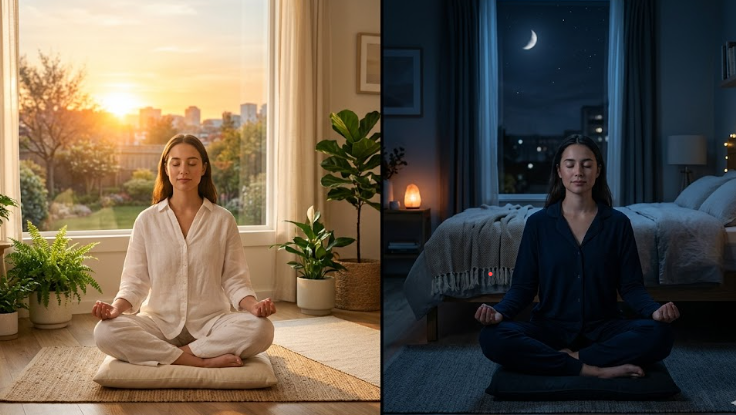
Breathing Techniques for Sleep (Night Routine)
Do you lie awake with a racing mind?
Breathing exercises for sleep can be a game‑changer.
Try this 5‑minute night routine:
- Lie on your back. Dim the lights. No phone.
- Do 5 rounds of 4‑7‑8 breathing.
- Then switch to belly breathing for 3 minutes.
- If your mind wanders, gently bring attention back to your breath.
Many people fall asleep before finishing. That’s a success! For more sleep‑focused practices, read our article:
10 Minute Meditation for Stress Relief.
Best Time to Practice Breathing Exercises
You can practice
breathing exercises for beginners any time. But certain times give extra benefits.
Morning (5‑10 minutes)
Start your day with diaphragmatic breathing or box breathing. This sets a calm, focused tone. You’ll handle morning stress (traffic, emails) much better.
Before Bed (5‑10 minutes)
Use 4‑7‑8 breathing or belly breathing. This signals your body that it’s time to sleep. Over time, your brain will associate deep breathing with falling asleep.
During Stressful Moments
Even 60 seconds of deep breathing can lower your stress in the moment. Try box breathing at your desk or in the car (parked!).
Breathing Techniques You Can Do Anywhere (Office / Travel)
One of the best things about
simple breathing exercises at home is that they also work anywhere else. Here are three “stealth” techniques for public places:
- Stealth box breathing: Do the 4‑4‑4‑4 pattern without moving your chest. Only you know you’re breathing deeply.
- Extended exhale: Inhale for 3 seconds, exhale for 6. No one can tell.
- Noticing breath: Simply pay attention to your natural breath for 2 minutes. This is mindfulness in action.
Use these during long meetings, before presentations, or while waiting for a flight. They’re silent, invisible, and effective.
Common Mistakes Beginners Make
Avoid these pitfalls when learning
breathing techniques for deep relaxation:
1. Overthinking the Count
“Am I doing 4 seconds exactly?” Relax. Use approximate counts. The rhythm matters more than precision.
2. Breathing Too Fast
Deep breathing should be slow and gentle. If you feel dizzy, you’re forcing it. Return to normal breathing and try again more softly.
3. Expecting Instant Perfection
Your mind will wander. You might feel restless at first. That’s normal. Stick with it for a week.
4. Only Practicing When Stressed
That’s like running only when chased. Practice daily when you’re calm, so the skill is there during crisis.
Tips to Get Better Results
Want to make the most of your
deep breathing techniques? Follow these simple tips:
- Practice daily: Even 2 minutes every day beats 20 minutes once a week.
- Create a quiet environment: Initially, find a calm spot. Later, you can practice anywhere.
- Combine with meditation: Use deep breathing as the anchor for mindfulness breathing. This amplifies the benefits.
- Be patient: Some days feel amazing. Other days feel distracted. Both are fine.
- Use reminders: Stick a note on your mirror: “Breathe.”
For a complete daily routine that includes breathing and meditation, check out:
Morning Meditation vs Midnight Meditation.
Frequently Asked Questions (FAQs)
What is the best breathing technique for relaxation?
The 4‑7‑8 breathing technique is often considered best for deep relaxation because the long exhale activates the parasympathetic nervous system. However, box breathing is also excellent for beginners. Try both and see which feels more natural.
How long should I do breathing exercises?
Start with 2‑5 minutes per session. As you get comfortable, increase to 10‑15 minutes. Even 2 minutes of deep breathing can lower stress in the moment.
Can breathing reduce stress instantly?
Yes. A single round of 4‑7‑8 breathing (inhale 4, hold 7, exhale 8) can lower your heart rate and calm your nervous system within 60‑90 seconds. For lasting change, practice daily.
Are breathing exercises safe daily?
Absolutely. Deep breathing is safe for most people. If you have a respiratory condition (like severe asthma or COPD), consult your doctor first. Otherwise, daily practice is encouraged.
Which breathing technique is best for beginners?
Simple diaphragmatic breathing (belly breathing) is the best place to start. Lie down, place a hand on your belly, and breathe deeply into your abdomen. Once comfortable, try box breathing or 4‑7‑8.
Conclusion
You now have five powerful
breathing techniques for deep relaxation. They’re free, portable, and work in minutes.
You don’t need to master all five. Pick one – belly breathing or box breathing – and practice for 2 minutes tomorrow morning.
Your 2026 action plan:
- Set a reminder on your phone: “Breathe for 3 minutes.”
- Choose one technique from this guide.
- Do it immediately after waking up (or before bed).
- After one week, add a second technique if you like.
Your breath has been with you your entire life. Now you know how to use it as your personal relaxation tool.
Start today. One deep breath at a time. 🌬️