
How to Meditate for Beginners at Home (Step‑by‑Step Guide 2026)
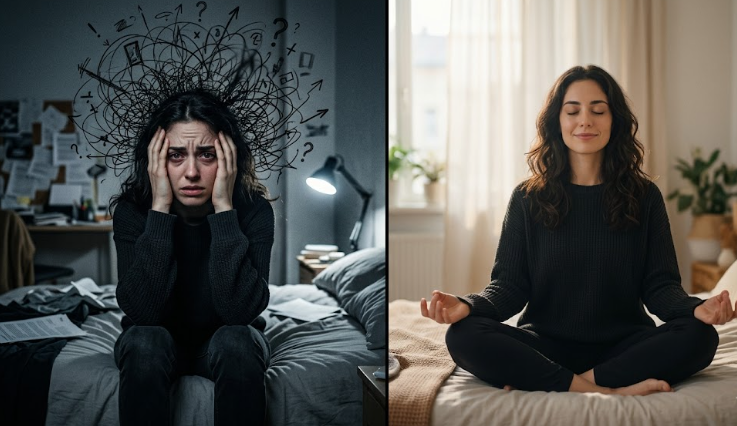
You’ve heard the buzz. Everyone from your favourite YouTuber to the most productive CEO swears by meditation. But when you sit down, close your eyes, and try to “clear your mind” – nothing happens. Your brain runs a marathon of to‑do lists, embarrassing memories, and what you’ll eat for dinner. You feel frustrated. “Am I doing it wrong?”
No, you’re not.
Meditation isn’t about stopping thoughts. It’s about learning to watch them without getting swept away. And the best part? You can master this skill at home, today, for free.
In this 2026 beginner’s guide, I’ll walk you through what is meditation, the real meditation meaning, proven meditation benefits, and a simple 10‑minute routine that works. You’ll also discover mindfulness meditation, breathing meditation, guided meditation, and meditation for sleep. No cushions, mantras, or yoga pants required.
Let’s begin your journey to a calmer mind – right from your living room.
What Is Meditation? (Simple Explanation)
What is meditation in plain language? It’s a set of techniques that train your attention and awareness. Think of it as a mental workout. Just as you lift weights to strengthen your muscles, you meditate to strengthen your focus, emotional balance, and inner peace.
The meditation meaning goes beyond relaxation. Ancient traditions describe it as “familiarising your mind with a positive state.” Modern science calls it “self‑regulation of attention.” But for a beginner at home, here’s the simplest definition:
Meditation is the practice of deliberately paying attention to the present moment, without judging it.
That’s it. You don’t have to sit cross‑legged for hours. You don’t need to chant. You can meditate while sitting on your couch, lying in bed, or even walking.
Meditation Benefits: Why Bother?
Sceptical? Let’s look at the science. Over 2,000 studies have documented meditation benefits for your brain, body, and emotions. Here’s what happens when you start a daily meditation routine:
Mental Benefits
-
Reduces stress – Lowers cortisol (the stress hormone) by up to 30%.
-
Less anxiety – Regular practice shrinks the amygdala, your brain’s fear centre.
-
Improves focus – After 8 weeks, attention span increases significantly.
-
Enhances creativity – Default mode network activity changes, allowing fresh ideas.
Physical Benefits
-
Lowers blood pressure – Especially with breathing meditation.
-
Boosts immunity – Increases antibodies against viruses.
-
Reduces chronic pain – Changes how the brain perceives pain signals.
-
Improves sleep – Meditation for sleep is now a first‑line recommendation for insomnia.
Emotional & Social Benefits
-
Greater self‑awareness – You notice unhelpful patterns without reacting.
-
More compassion – Loving‑kindness meditation increases empathy.
-
Better emotional regulation – Fewer outbursts, more patience.
And the best news? You only need 5–10 minutes a day to start reaping these meditation benefits.
Step‑by‑Step Beginner Meditation Guide (At Home)
Ready to meditate? Follow this simple 10‑minute routine. All you need is a quiet spot and a chair or cushion.
Step 1: Prepare Your Space (1 min)
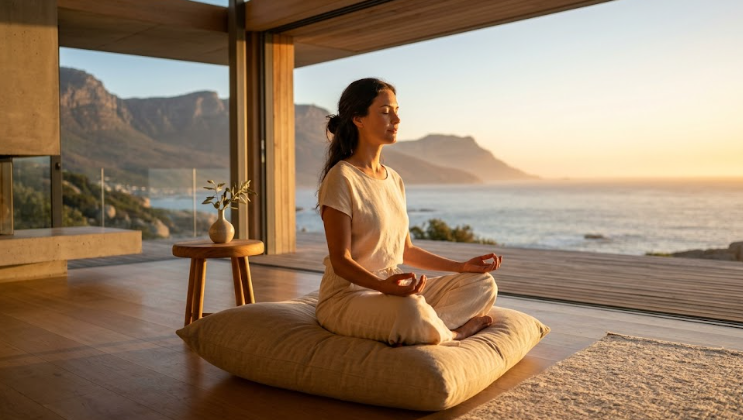
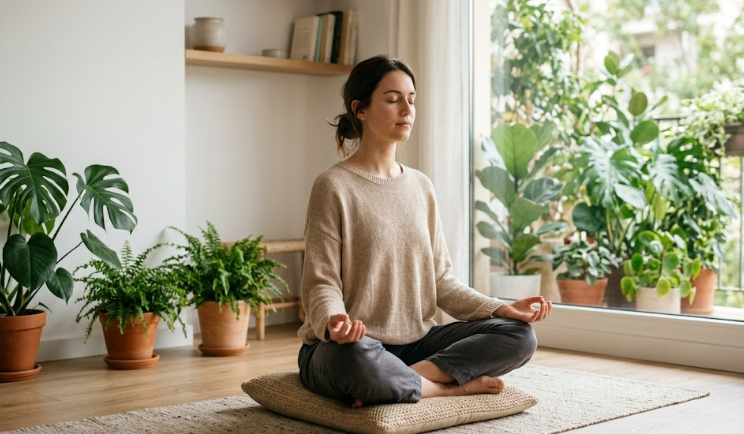
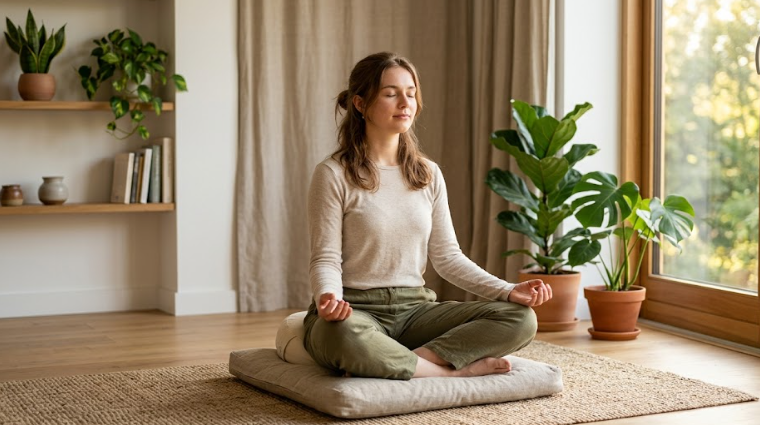
Choose a place where you won’t be interrupted for 10 minutes. Turn off phone notifications. Dim the lights if you prefer. You can sit on a chair with your back straight, feet flat on the floor, or on a cushion with your legs crossed. Keep your hands resting on your thighs.
Step 2: Set a Timer (30 sec)
Use your phone’s timer or a meditation app like Insight Timer. Start with 5 minutes. Once comfortable, increase to 10 or 15 minutes. Having a timer stops you from peeking at the clock.
Step 3: Get Into Position (30 sec)
Close your eyes gently – or leave them slightly open with a soft gaze. Relax your shoulders. Tuck your chin slightly. Breathe naturally. Don’t force anything.
Step 4: Focus on Your Breath (5‑7 min)
This is the core of breathing meditation. Pay attention to the physical sensation of your breath:
-
Feel the air entering your nostrils.
-
Notice your chest or belly rising.
-
Feel the air leaving, slightly warmer.
You don’t need to control your breath. Just observe it. When your mind wanders (and it will), gently bring your attention back to the breath. No self‑criticism. That wandering – and returning – is the meditation.
Step 5: End Gently (1 min)
When the timer rings, don’t jump up. Slowly bring awareness back to your body. Notice any sounds. Wiggle your fingers and toes. Open your eyes. Take a deep breath.
That’s it. One complete meditation session.
Types of Meditation for Beginners
Not every meditation style works for everyone. Here are four beginner‑friendly types. Try each for a week and see what fits.
Mindfulness Meditation
This is the most researched form. Mindfulness meditation means observing whatever arises – thoughts, emotions, body sensations – without reacting. You anchor yourself with the breath, but you also notice sounds, itches, or worries. The key phrase: “Oh, that’s a thought. Back to breathing.”
Best for: Reducing overthinking and stress.
Breathing Meditation (Pranayama)
Breathing meditation uses conscious breath control. A simple technique: inhale for 4 seconds, hold for 4 seconds, exhale for 6 seconds. This activates your parasympathetic nervous system (rest‑and‑digest). No complex yoga required.
Best for: Instant calm before a stressful event.
Guided Meditation
Guided meditation means following a teacher’s voice. They tell you when to breathe, what to visualise, and how to scan your body. You can find thousands of free guided meditation videos on YouTube or apps like Headspace and Calm. Even a 5‑minute guided meditation can reset your mood.
Best for: Absolute beginners who feel lost meditating alone.
Meditation for Sleep
Meditation for sleep is usually done lying down. You focus on relaxing each body part (body scan) or listen to a sleep meditation recording. It’s highly effective for insomnia. Many people fall asleep before the session ends – that’s fine!
Best for: People who struggle to fall asleep or wake up in the middle of the night.
Best Time for Meditation: Morning, Night, or Anytime?
The best time is the time you’ll actually do. That said, morning meditation has special advantages.
Morning Meditation (Recommended)
-
Your mind is fresher – fewer distractions have piled up.
-
Sets a calm, intentional tone for the rest of the day.
-
You’re less likely to skip it (evenings can get unpredictable).
Try meditating right after you brush your teeth, before checking your phone. Even 5 minutes of morning meditation can reduce midday anxiety.
Afternoon or Evening
If mornings are impossible, meditate during lunch break or before dinner. Meditation for sleep works best 30–60 minutes before bed. Avoid meditating right after a heavy meal – you may feel drowsy.
Creating a Daily Meditation Routine
Consistency matters more than duration. A daily meditation habit of 5 minutes beats a 60‑minute session once a week. Use habit stacking: “After I make coffee, I meditate for 5 minutes.” Soon it becomes automatic.
Meditation for Sleep and Anxiety
Anxiety often spikes at night. Your head hits the pillow, and suddenly you’re replaying every mistake from 2015. Meditation for sleep breaks that cycle.
Try this 4‑step sleep meditation tonight:
-
Lie on your back, arms relaxed.
-
Inhale slowly through your nose for 4 seconds.
-
Exhale even more slowly through your mouth for 6 seconds.
-
As you exhale, mentally say “soften” or “release.”
Do this for 3–5 minutes. If anxious thoughts appear, label them “thinking” and return to your breath. Within a week, you’ll notice falling asleep faster.
For daytime anxiety, use a 2‑minute breathing meditation: breathe in for 4, hold for 4, out for 6. Repeat 5 times. It’s discreet enough to do at your desk.
Common Mistakes Beginners Make (And How to Fix Them)
Mistake 1: Trying to Stop Thoughts
“My mind is so noisy. I’m failing.” Fix: Thoughts are normal. The goal isn’t a blank mind. It’s noticing thoughts and returning to your anchor (breath, sound, body). Every return is a rep.
Mistake 2: Meditating Only When Stressed
“I only meditate when I feel anxious.” Fix: That’s like running only when a lion chases you. Practice when you’re calm so the skill is there when you need it.
Mistake 3: Sitting Uncomfortably
“My back hurts after 2 minutes.” Fix: Use a chair. Lie down. Lean against a wall. Comfort is key.
Mistake 4: Judging Your Performance
“That was a bad meditation.” Fix: There’s no bad meditation. Even a “distracted” session teaches you something about your mind. Celebrate that you showed up.
Tips to Stay Consistent
-
Start tiny – 2 minutes a day. Seriously. Anyone can do 2 minutes.
-
Attach it to an existing habit – e.g., “after I brush my teeth, I meditate.”
-
Use reminders – sticky note on your mirror, phone alarm, or habit‑tracking app.
-
Don’t break the chain – mark each day you meditate on a calendar. Watch the streak grow.
-
Join a community – online groups or apps add accountability.
-
Forgive yourself – missed a day? Start again today. No guilt.
Frequently Asked Questions (FAQ)
1. How long should a beginner meditate?
Start with 5 minutes once a day. After one week, increase to 10 minutes. The sweet spot for meditation benefits is 10–20 minutes daily.
2. Can I meditate lying down?
Yes. Meditation for sleep is often done lying down. For daytime mindfulness meditation, sitting keeps you more alert, but lying down is fine if you won’t fall asleep.
3. Do I need a special app or teacher?
No. This guide gives you everything. However, guided meditation apps can be helpful for the first few weeks. Free options: Insight Timer, UCLA Mindful, or YouTube.
4. What if I fall asleep during meditation?
It happens – especially with meditation for sleep or after a tiring day. If you’re meditating for alertness, sit upright and meditate earlier in the day. If you’re meditating for sleep, falling asleep is actually a success.
5. How soon will I see meditation benefits?
Some benefits (calmer breathing, less immediate stress) appear after one session. Deeper changes – like reduced anxiety or better focus – usually take 8 weeks of daily meditation (even 10 minutes). Stick with it.
Conclusion: Your First Step Today
You don’t need a Himalayan cave, expensive courses, or willpower of steel. You need 5 minutes, a quiet corner, and the willingness to try.
Here’s your 2026 action plan:
-
Tomorrow morning, after you brush your teeth, sit down for 5 minutes.
-
Follow the breathing meditation steps above.
-
When your mind wanders, smile and bring it back.
-
Repeat the next day.
In one month, you’ll notice: less racing thoughts, better sleep, more patience with loved ones. Deep meditation isn’t a magical escape – it’s coming home to yourself.
Your turn. Close this tab after you’ve set a reminder on your phone: “Meditate 5 min – morning.” Your future calmer self will thank you.
Start today. One breath at a time. 🧘