
Do you ever feel like your brain is a browser with 47 tabs open? Work deadlines. Family demands. News alerts. That nagging feeling you forgot something important.
Stress isn’t just annoying. It drains your energy, ruins your sleep, and makes you snap at people you love. You’ve probably heard that meditation helps. But who has an hour to sit on a cushion? And honestly… doesn’t meditation require years of practice?
Good news: That’s a myth.
You can get real, noticeable stress relief in just 10 minutes a day. This 10 minute meditation for stress relief guide is made for absolute beginners. No special gear. No chanting. No “clearing your mind” nonsense.
By the end of this article, you’ll have a simple routine you can start right now – yes, even if you’re reading this on your phone at 11 PM.
Let’s turn down the mental noise. One breath at a time.
What is Meditation for Stress Relief?
Before we jump into the “how”, let’s clarify what meditation for stress relief actually means.
Meditation for stress isn’t about escaping your problems. It’s about changing your relationship with them.
When you’re stressed, your body activates the “fight or flight” response. Your heart races. Muscles tighten. Your mind jumps from worst‑case scenario to worst‑case scenario. Meditation gently trains your brain to step out of that loop. You learn to notice stressful thoughts without getting pulled under by them.
Think of it like this: stress is a storm. Meditation doesn’t stop the storm. It teaches you to stand under a strong roof, watch the rain, and say: “I’m safe. This will pass.”
That’s the real power of a quick meditation practice. And you don’t need years – you need 10 minutes and a willingness to try.
Benefits of 10 Minute Meditation
You might think: “Can only 10 minutes really make a difference?”
Yes. Science agrees.
Here are the meditation benefits you can expect from a daily meditation routine of just 10 minutes:
Mental Benefits
-
Reduces cortisol – the main stress hormone drops within a single session.
-
Less rumination – you stop replaying the same worries over and over.
-
Improved focus – you’ll get distracted less often.
-
More mental clarity – decisions feel easier.
Emotional Benefits
-
Greater calm – your baseline anxiety lowers.
-
Better mood – regular practice increases positive emotions.
-
More patience – you’ll react less impulsively.
Physical Benefits
-
Lower blood pressure – especially with breathing meditation.
-
Reduced muscle tension – headaches and jaw clenching improve.
-
Better sleep – meditation for anxiety directly helps insomnia.
The best part? Many of these benefits start after your very first 10 minute meditation for stress relief.
Why 10 Minutes is Enough (Simple Science)
You might worry: “Isn’t 10 minutes too short?”
Here’s what researchers found: even brief mindfulness meditation (5–10 minutes) changes brain activity. In one study, people who meditated for 10 minutes daily for two weeks reported significantly less stress and greater compassion.
Why? Because stress relief doesn’t require hours. It requires consistency.
Think of meditation like brushing your teeth. Brushing for 30 minutes once a month does nothing. But 2 minutes every day? That keeps cavities away. Same with a quick meditation practice. 10 minutes daily rewires your brain’s stress pathways more effectively than a single one‑hour session on Sunday.
So stop waiting for “more time”. Start with 10 minutes. That’s one episode of your favourite show – minus the ads.
Step‑by‑Step 10 Minute Meditation Routine
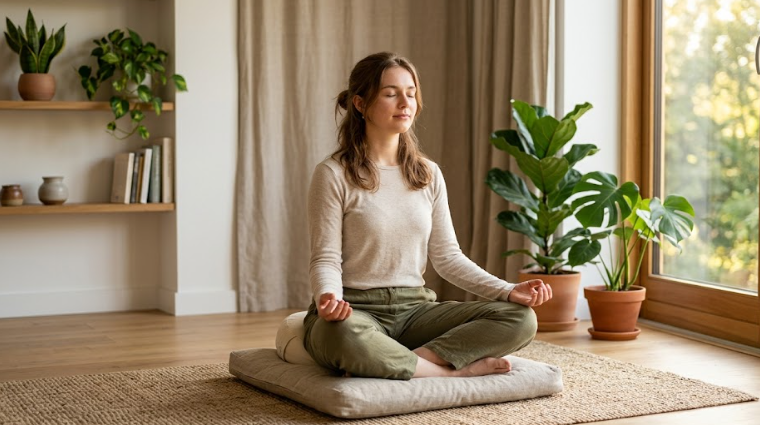
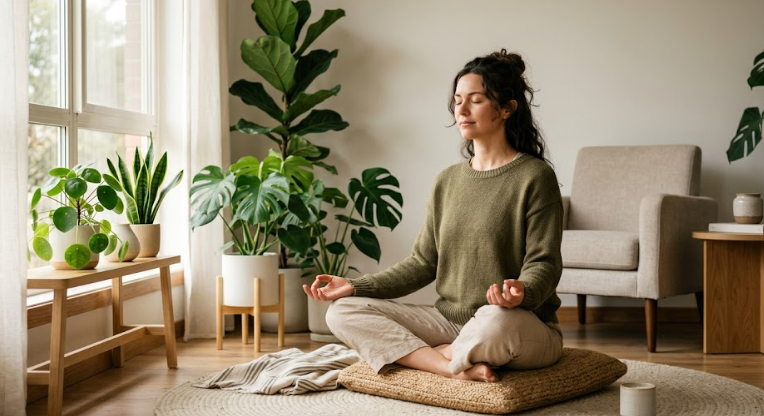
Ready? Find a quiet spot where you won’t be interrupted for 10 minutes. You can sit on a chair, a cushion, or even lie down (if you won’t fall asleep).
Step 1: Get comfortable (30 seconds) Sit with your back straight but not rigid. Rest your hands on your thighs. Close your eyes gently, or keep them open with a soft gaze. Relax your shoulders away from your ears.
Step 2: Set a timer (10 seconds) Use your phone’s timer. Set it for 10 minutes. This stops you from peeking at the clock.
Step 3: Take three deep breaths (30 seconds) Inhale slowly through your nose for 4 seconds. Hold for 1 second. Exhale through your mouth for 6 seconds. Repeat three times. Notice how your body begins to soften.
Step 4: Anchor on your breath (8 minutes) Let your breathing return to normal. Now simply pay attention to the physical sensation of breathing.
-
Feel the air moving in and out of your nostrils.
-
Or notice your chest rising and falling.
-
Or focus on your belly expanding with each inhale.
Your mind will wander. That’s normal. When you realise you’re thinking about work, dinner, or that embarrassing thing you said in 2019 – gently bring your attention back to your breath. No judgement. No “I’m bad at this”. Just return. Every return is like a bicep curl for your focus muscle.
Step 5: Body scan (1 minute) For the last minute, expand your awareness from your breath to your whole body. Notice any areas of tension – jaw, shoulders, hands. Imagine breathing into that tight spot. On each exhale, picture the tension melting away.
Step 6: End gently (30 seconds) When the timer rings, don’t jump up. Slowly bring movement back. Wiggle your fingers and toes. Roll your shoulders. Open your eyes. Take a final deep breath.
That’s it. You just completed a full 10 minute meditation for stress relief. How do you feel? Calmer? Lighter?
Best Breathing Techniques for Stress Relief
Breathing is your fastest tool to calm the nervous system. This simple breathing meditation can be done anywhere – at your desk, in the car (parked!), or before a difficult conversation.
The 4‑7‑8 Breathing Method
-
Inhale through your nose for 4 seconds.
-
Hold your breath for 7 seconds.
-
Exhale slowly through your mouth for 8 seconds.
Repeat 5 to 8 times.
Why does this work? The long exhale activates your parasympathetic nervous system – the “rest and digest” mode. It’s a natural antidote to stress. Use this relaxation technique whenever you feel overwhelmed. Even 2 minutes can reset your state.
Types of Meditation You Can Try
Not every style fits every person. Here are three beginner‑friendly meditation techniques you can rotate.
Mindfulness Meditation
This is the classic “watch your thoughts” practice. You sit and observe whatever arises – sounds, body sensations, emotions, thoughts – without reacting. Best for: Overthinking and general stress.
Guided Meditation
Guided meditation means following a teacher’s voice. They tell you when to breathe, what to visualise, and how to scan your body. Apps like Insight Timer (free) or YouTube have thousands of 10‑minute sessions. Best for: Absolute beginners who feel lost meditating alone.
Breathing Meditation (Pranayama)
You already learned the 4‑7‑8 technique. Other simple methods: equal breathing (inhale 4, exhale 4) or “box breathing” (inhale 4, hold 4, exhale 4, hold 4). Best for: Instant calm before a stressful event.
You can mix them. Some days you’ll want a guided meditation. Other days, just sitting with your breath is enough.
When is the Best Time to Meditate?
The best time is the time you’ll actually do. But here are two proven windows:
Morning Meditation
Meditating within 30 minutes of waking sets a calm tone for the whole day. Your mind is fresher, and you’re less likely to skip it (evenings can get chaotic). Try morning meditation right after you brush your teeth, before checking your phone.
Night Routine
If stress keeps you awake, a 10 minute meditation for anxiety before bed works wonders. Combine it with dim lights and no screens. A meditation for stress at night helps you fall asleep faster and sleep more deeply.
Can’t do morning or night? Lunch break works too. The key is daily meditation consistency, not perfect timing.
Common Mistakes Beginners Make
Don’t worry – everyone makes these. Now you can skip them.
Mistake 1: Trying to stop thoughts
“I can’t stop thinking. I’m failing.” Fix: You’re not supposed to stop thoughts. You’re supposed to notice them and return to your breath. That returning is the meditation.
Mistake 2: Sitting in pain
“My back hurts after 2 minutes.” Fix: Use a chair. Lie down. Lean against a wall. Comfort is not cheating.
Mistake 3: Judging your session
“That was a bad meditation.” Fix: There’s no “bad”. Even a distracted session teaches you something about your mind. Celebrate that you showed up.
Mistake 4: Meditating only when stressed
“I only meditate during a crisis.” Fix: That’s like eating only when you’re starving. Practice when you’re calm so the skill is there when you need it.
Tips to Stay Consistent with Daily Meditation
Building a daily meditation routine is easier than you think.
-
Start tiny – 5 minutes is fine. Even 2 minutes. Just start.
-
Habit stack – attach meditation to an existing habit. Example: “After I make my coffee, I meditate for 10 minutes.”
-
Use reminders – sticky note on your mirror, phone alarm, or a habit‑tracking app.
-
Don’t break the chain – mark an X on a calendar each day you meditate. Try not to miss two days in a row.
-
Forgive yourself – missed a day? Start again today. No guilt. No shame.
Remember: a quick meditation done daily beats a long session once a week.
10 Minute Meditation for Anxiety and Better Sleep
Stress and anxiety often show up worst at night. Your head hits the pillow, and suddenly your brain replays every mistake from the last decade. Then you can’t sleep. Then you’re tired the next day, so you’re more stressed. Vicious cycle.
A 10 minute meditation for anxiety breaks that loop.
Try this sleep meditation tonight:
-
Lie on your back. Arms relaxed by your sides.
-
Close your eyes. Take 3 slow, deep breaths.
-
Now do a body scan: start at your toes. Silently say “relax” as you exhale. Move up to feet, calves, knees, thighs, belly, chest, hands, arms, shoulders, neck, face.
-
If anxious thoughts appear, label them “worry” and return to the body part you were on.
Within a few nights, you’ll notice falling asleep faster. Your mental health improves because sleep and stress are deeply connected.
Frequently Asked Questions (FAQ)
1. Can meditation reduce stress quickly?
Yes. Even one 10 minute meditation for stress relief lowers cortisol levels and reduces blood pressure. You’ll feel calmer within minutes. For lasting change, practice daily.
2. Is 10 minutes meditation enough for beginners?
Absolutely. In fact, 10 minutes is ideal. It’s long enough to settle your mind but short enough to fit into a busy schedule. Consistency matters more than duration.
3. Can beginners do meditation at home?
Yes – and it’s often better than a class. Your home is comfortable, private, and free. Just follow the step‑by‑step guide above. No special equipment needed.
4. What is the best time for meditation?
Morning meditation (right after waking) works best for most people. But any time you can consistently practice is good. Some prefer a quick meditation during lunch or before bed.
5. How long should I meditate daily?
Start with 5–10 minutes. Once comfortable, you can stay at 10 minutes or increase to 15–20 minutes. The research shows meditation benefits plateau after 20 minutes for most people, so don’t stress about doing more.