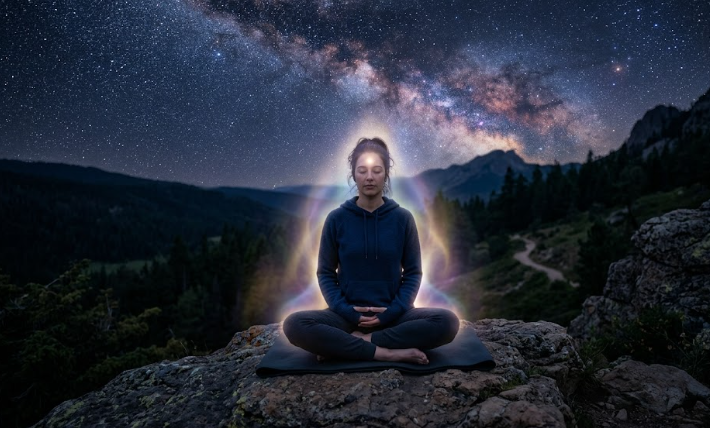
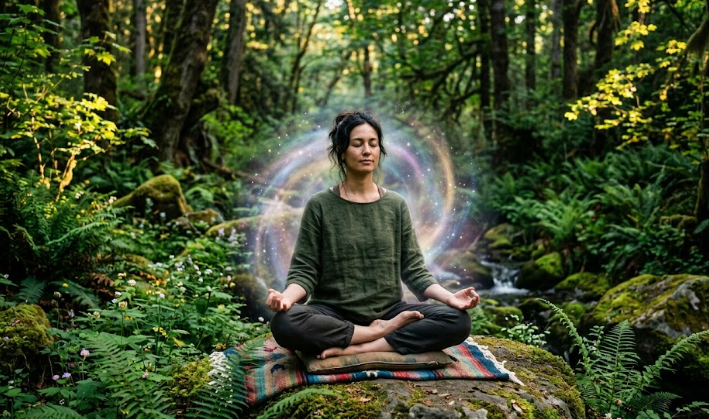
Have you ever felt a strange pressure between your eyebrows? Or woken from a dream so vivid it felt more real than real life? You might be experiencing signs of something profound: third eye awakening. But what is third eye awakening exactly? Is it dangerous? Do you need special powers? In this complete beginner’s guide, we’ll demystify the third eye meaning, explore the third eye opening symptoms, and show you step‑by‑step how to activate your third eye safely. No fear‑mongering. No unrealistic promises. Just a clear, balanced map to one of spirituality’s most fascinating frontiers.
Third Eye Awakening: What Actually Happens and How to Start Safely
Three years ago, I felt this weird pressure right between my eyebrows. Not a headache. More like someone was gently pressing a fingertip there, even when no one was around. Honestly, I thought I was imagining things.
Then the dreams started. Crazy vivid. I’d wake up remembering every detail—colors, conversations, feelings that lingered for hours. A friend mentioned “third eye awakening,” and I laughed it off. Sounded like something from a fantasy novel.
Turns out, she wasn't wrong. And neither was I. The pressure? The dreams? Those were real signs. But the version of third eye awakening you see on social media—floating crystals, instant psychic powers—that’s mostly nonsense. Let me explain what actually happens.
What Is the Third Eye? (No, It’s Not a Hidden Camera)
First, let’s get this straight. The third eye isn’t a literal eye growing inside your skull. That’s a metaphor that somehow became literal in pop culture.
In spiritual traditions—especially Hindu and Buddhist—the third eye is an energy center called the
Ajna chakra. It sits right between your eyebrows. Think of it as a switchboard for intuition, inner vision, and clarity.
Here’s an analogy I like. Your two physical eyes see what’s in front of you—trees, cars, faces. The third eye “sees” patterns, gut feelings, the stuff you can’t measure with a ruler. As Sadhguru put it: “The third eye is not a crack in the forehead. It simply means that perception has reached its ultimate possibility.”
The color associated with it is
indigo, a deep blue‑purple. And its element? Light. Not bad for something invisible.
Third Eye Awakening Defined (Stop Expecting Superhero Powers)
So what does awakening mean in real life? I asked this same question when I started, and most answers were frustratingly vague.
Awakening your third eye is basically turning up the volume on your inner knowing. Before, you might ignore that weird feeling about a person or a decision. After, you trust it. Before, life feels random. After, you notice synchronicities—meaningful coincidences that feel like winks from the universe.
Spiritual teacher Taylor Turner calls it “a summons to greater consciousness.” Fancy words, sure. But here’s the plain version: your awareness expands. Slowly. Often so slowly you don’t notice until something shifts.
And no—you won’t wake up one morning with X‑ray vision. Sorry.
8 Signs Your Third Eye Is Stirring (From My Own Experience)
When I first felt that eyebrow pressure, I googled like crazy. These were the signs that kept popping up—and most of them matched what I was going through.
1. Pressure or tingling between your eyebrows. This is the classic. Feels like a gentle finger or a soft buzzing. Don’t panic. It’s just energy moving.
2. Dreams that feel like movies. You wake up and think, “Was that real?” Detailed, emotional, sometimes bizarre. I started keeping a dream journal because I couldn’t forget them.
3. Seeing repeating numbers. 111, 222, 444 on clocks, license plates, receipts. Some call it angel numbers. I call it your brain noticing patterns it used to ignore.
4. Your gut feelings get loud. You just know things. Someone’s lying. A choice is right. A place feels off. And you’re usually correct.
5. Lights seem brighter. Sounds seem sharper. Your senses wake up. Bright sun almost hurts. Loud noises startle you more. It settles down.
6. Flashes of color behind closed eyes. During meditation or right before sleep, you might see purple, indigo, or geometric shapes. That’s your third eye “seeing” energy.
7. Your life rearranges itself. Old friendships fade. Foods you loved suddenly taste wrong. You want less clutter, more quiet. It’s not depression—it’s alignment.
8. You stop sweating the small stuff. Arguments that used to hook you now seem silly. You see the bigger picture—how everyone’s just doing their best.
If a few of these sound familiar, don’t rush out to buy a crystal. Just notice. That’s enough for now.
“I’ve seen people force their third eye open with intense meditation and substances, and they end up anxious, spaced out, or worse. The safest path is the slow path. You wouldn’t force a flower to bloom—same here.” — That’s what a longtime meditator told me when I was starting. He’d been practicing for 20 years. I believe him.
Is Third Eye Awakening Dangerous? The Honest Truth
This question made me nervous when I first heard it. So let me give you a straight answer.
For most people, no—third eye awakening isn’t dangerous
when you go slow. Gentle meditation, mindfulness, breathwork—these are safe. Thousands do it daily.
But here’s the part most spiritual blogs skip. If you force it—meditating for hours without grounding, chasing visions, using drugs—you can end up feeling ungrounded, anxious, or disconnected. Like you’re floating outside your body. That’s not fun.
Also, if you have a history of psychosis or bipolar disorder, talk to a therapist before messing with energy practices. Stirring up your subconscious too fast can be destabilizing.
The most common mistake? Ignoring the lower chakras. People focus all their energy on the third eye while their root chakra (grounding) is weak. That’s like building a skyscraper on sand. The fix is simple: pair third eye work with grounding—walking barefoot, eating root veggies, spending time in nature.
As Osho said, “If the third eye is blocked and you stop your eyes, you will feel a certain uneasiness because the energy has nowhere to move.” So don’t block. Just flow gently.
Real Benefits (What You Actually Gain)
After a few months of consistent practice, here’s what shifted for me—and for many others I’ve talked to.
- Better intuition. I make decisions faster and trust myself more. Less second‑guessing.
- Less mental clutter. My mind still chatters, but I don’t get stuck in loops as often.
- More creativity. Ideas come easier. Writing feels less like pulling teeth.
- A sense of connection. Not religious exactly. More like feeling part of something larger. Calming.
- Seeing my own blind spots. This one’s uncomfortable but valuable. I notice when I’m projecting or being defensive. Then I can choose differently.
Sadhguru explains that an activated Ajna chakra “reduces unnecessary mental chatter” and brings a peaceful, calm state. That matches my experience. It’s not fireworks—more like the hum of a well‑tuned engine.
How to Awaken Your Third Eye Safely: A Step‑by‑Step Routine
Here’s the exact 10‑minute routine I used (and still use). No fluff. No expensive tools.
Step 1: Ground first (seriously, don’t skip). Take two minutes. Feel your feet on the floor. Imagine roots growing into the earth. Breathe deep into your belly. Grounding keeps you from floating away.
Step 2: Sit comfortably. Cross‑legged on a cushion, in a chair, whatever. Keep your spine straight but not rigid. Close your eyes gently.
Step 3: Breathe slowly. Inhale for 4 counts. Hold for 4. Exhale for 6. Do this eight to ten times. It calms your nervous system.
Step 4: Shift your gaze upward. With eyes still closed, gently look toward the space between your eyebrows. Don’t strain. Just a soft lift. This is called
Shambhavi mudra.
Step 5: Visualize indigo light. The third eye’s color is indigo. Imagine a soft, glowing indigo sphere at your forehead. With each inhale, it brightens. With each exhale, it spins gently. No forcing.
Step 6: Repeat a mantra silently. “OM” or “AUM” is traditional. You can also use “I trust my intuition” or “I see clearly.” Sync it with your exhale.
Step 7: Sit in silence. For the last three to five minutes, drop all technique. Just be. Don’t chase feelings. Don’t label anything. Simply sit.
Step 8: Close gently. Release the gaze. Take three deep breaths. Wiggle fingers and toes. Open your eyes slowly. Thank yourself.
Do this daily. Ten minutes is plenty. Consistency beats intensity every time.
More Techniques (If You Want to Explore)
The routine above is enough. But if you’re curious, try these:
- Alternate nostril breathing (Nadi Shodhana): Balances left and right brain. Close right nostril with thumb, inhale left. Close left, exhale right. Repeat for five minutes.
- Candle gazing (Trataka): Sit two feet from a candle flame. Gaze softly without blinking for a minute or two. Then close eyes and visualize the afterimage at your third eye.
- Kitchari mudra: Curl your tongue back toward your soft palate. Ancient technique that directs energy upward.
- Binaural beats. Some people like theta‑frequency tracks. I’m not 100% sure why they work, but they seem to help some folks quiet the mind.
Remember: these are extras. Master the core routine first.
Common Beginner Mistakes (I Made Almost All of These)
Learn from my face‑plants.
- Chasing fireworks. I used to meditate hoping to see lights. That expectation blocked everything. Let go of outcomes.
- Skipping grounding. I felt spaced out for weeks until I realized I was all upper chakra, no roots. Oops.
- Expecting instant results. Some people feel shifts in weeks. Others take years. Both are normal. The journey is the growth.
- Straining your eyes. Soft gaze. Not a death stare. Relax your face.
- Ignoring your lifestyle. Meditation won’t outrun junk food, bad sleep, or constant screen time. Tweak those things too.
Myths vs. Reality: A Quick Table
| What People Think |
What Actually Happens |
| You’ll see ghosts and spirits |
Mostly enhanced intuition, vivid dreams, and subtle energy — not horror movies |
| It happens overnight |
Gradual process over months or years |
| You need a guru or secret ritual |
Anyone can start with consistent meditation and self‑awareness |
| It’s dangerous or demonic |
Safe for most when approached gently and with grounding |
| Third eye = pineal gland |
Related but not identical. Pineal is physical; third eye is energetic |
Your Daily Routine (Simple Version)
You don’t need to overhaul your life. Just add small things.
Morning (5 min): Before checking your phone, close your eyes, breathe, and gently gaze to your third eye area.
During the day: Eat purple foods (grapes, blueberries, eggplant). Reduce screen time when you can.
Evening (10 min): Your core third eye meditation.
Before sleep: Keep a dream journal. Write whatever you remember.
Once a week: Walk barefoot on grass or earth. Grounding keeps everything balanced.
Frequently Asked Questions
What happens when your third eye awakens?
You might feel pressure between your brows, have vivid dreams, notice synchronicities, and trust your gut more. These unfold slowly, not all at once.
Can third eye awakening be dangerous?
Generally no, if you take it slow and stay grounded. Forcing it with drugs or extreme practices can cause anxiety or disorientation. Gentle daily work is safe.
How long does awakening take?
There’s no set timeline. Some feel shifts in weeks. Others take years. Focus on the practice, not the deadline.
What does the third eye feel like physically?
Most report a gentle pressure, warmth, or tingling between the eyebrows. Some feel a light vibration or sense of expansion.
Is the third eye just the pineal gland?
No. The pineal gland is a physical part of your brain. The third eye is an energetic center associated with that area. They’re connected but not the same.
Can I awaken my third eye if I’m not spiritual?
Sure. You can treat it as a mindfulness practice. Enhanced intuition and clarity benefit anyone, regardless of belief system.
One Last Thing
Third eye awakening won’t turn you into a superhero. You won’t levitate or read minds (probably). But you will start seeing things more clearly—your own patterns, other people’s motives, the quiet wisdom underneath daily noise.
That pressure you feel? That vivid dream you can’t shake? Those aren’t accidents. Your inner eye is already beginning to open.
Trust it. Go slow. Stay grounded. And don’t forget to live your actual life. That’s where the real magic happens anyway.
🌟 For the curious:
Chakras and Higher Consciousness |
Symbolic Imagery in Meditation